

Introduction
This has been a busy Premodern summer for me. I have played in a tournament 5 weeks in a row from mid July to August. This is not a complaint. In fact, this statement is the opposite of a complaint. Premodern is Magic: the Gathering’s greatest format. It is amazing that there are so many higher stakes tournaments. I will take the opportunity to play in as many of them as I feasibly can. Sometimes I will even play in ones that are more difficult to get to. However, everyone needs to take a break from time to time. With no major Premodern tournament on the calendar for me this past weekend, I was ready to take a week off.
How would I spend my week off from Magic? By playing Magic, of course!
Shane Echevarria from Duress Crew first told me about Classic Legacy a few months ago at the Boston Cube Party. Hearing him describe the different decks immediately brought back fond memories of when I first started playing competitive magic. When I found out that he was organizing a Classic Legacy tournament at Great Stories in Whitinsville, Massachusetts, I knew that I had to attend.
Deck Selection
Selecting a deck for this tournament was difficult. As I searched through different deck lists, there were so many choices that I simply could not decide.
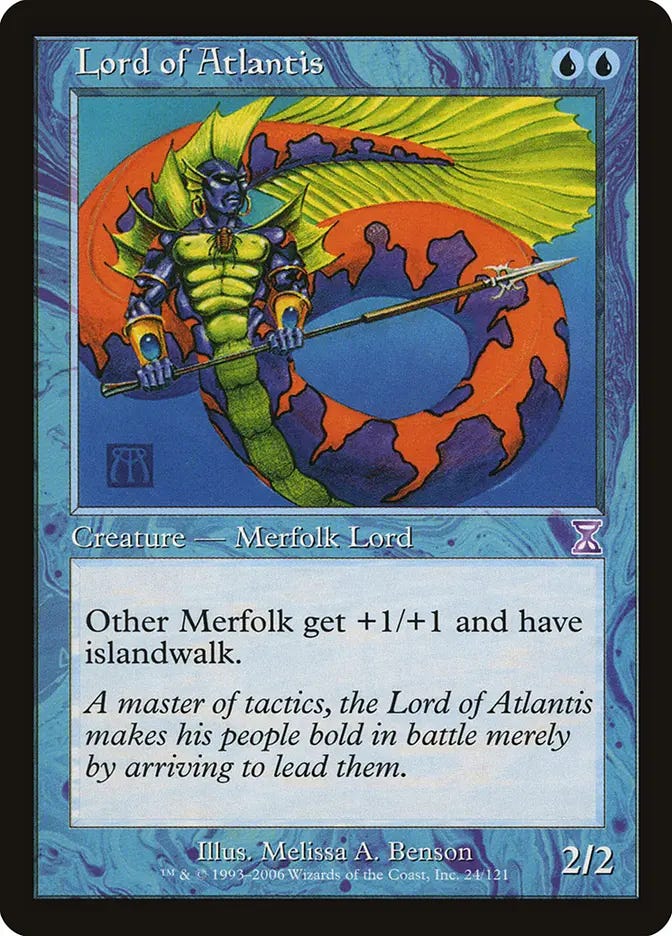
My first inclination was to play Merfolk. Specifically splashing black for sideboard cards. Merfolk was my first Legacy deck. When I was in high school, I saw Merfolk win a major tournament, and I thought it was the coolest deck. I had a credit card from my parents that was for emergencies only. This was absolutely an emergency that I needed to play this deck. I bought all of the cards and dealt with the consequences later (spoiler: my parents were not thrilled). Luckily, I got Underground Seas well below the current market value that I still use today.
While it would have been cool to go back to the first Legacy deck I ever played, there was another card that kept pulling me towards it. If you do not know which card I am referring to, you have not been paying attention.
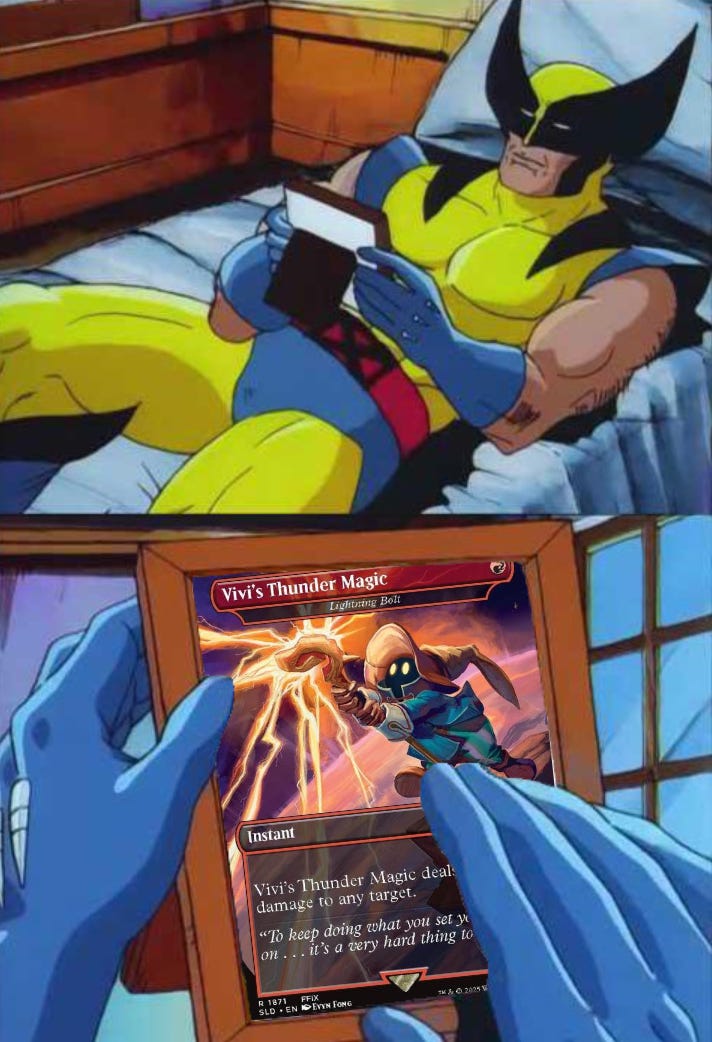
I could not pass on an opportunity to play Lightning Bolt. It had been three whole weeks since I last dealt three damage for one mana. Looking at burn lists was an immediate dopamine hit on my favorite cards of all time. I decided on playing Lightning Bolt and Chain Lightning, but I did not think Mono Red Burn would be the best call.
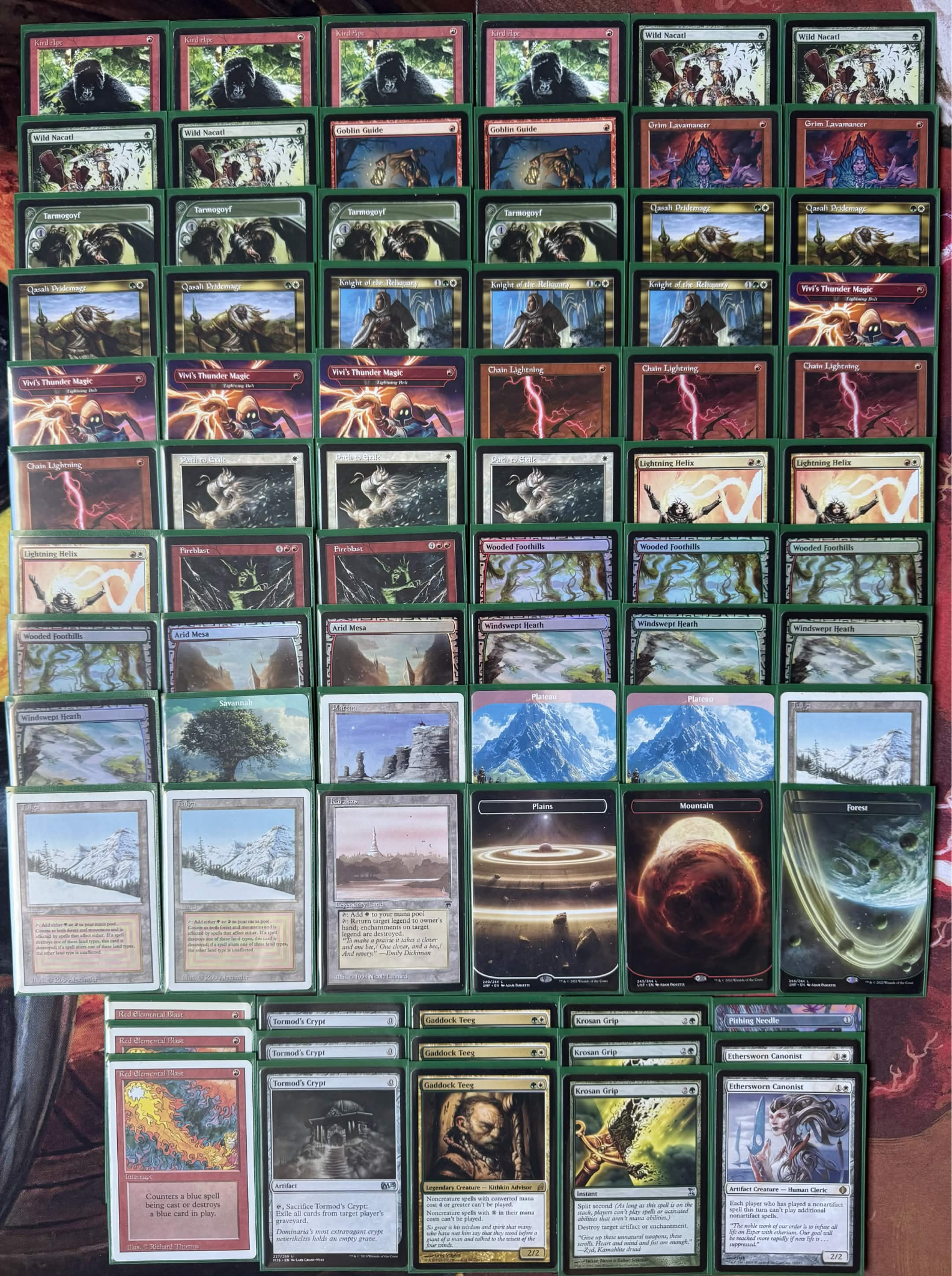
I found myself looking at Zoo lists and knew that was what I was going to play. Kird Ape and Wild Nacatl are so sick for only one mana. Tarmogoyf is an iconic creature that I loved playing with. Cheap creatures and burn spells to close out a game. I was locked in.
The event was proxy friendly, but I had most of the cards. I only needed 3 proxies in total (One Savannah and Two Plateau). When I use proxies, I want to make it clear that they are not real cards by using art that was not on an actual printing. I made a few tweaks to the lists I saw online to include Knight of the Reliquary and a copy of Karakas.
Observations
I did not take any notes during this tournament. I was trying to be more present and just enjoy the games rather than committing every sequence to memory. So instead of a tournament report, here are six observations I made from the day,
1. Mana is perfect, but mana bases are greedy
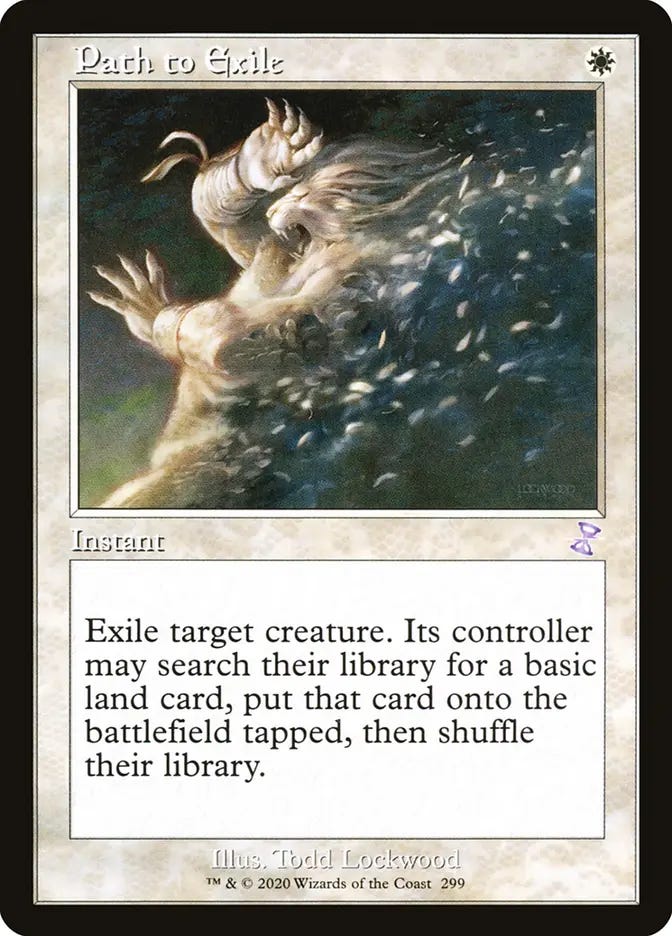
I noticed a large number of three color decks in the room. Compared to Premodern, the mana is very good as a function of fetch lands being able to get duals instead of just basics. The event’s sole 5-0 was a four color Zoo deck. If you have a set of cards that you want to play across multiple colors, then there is a strong chance that you can construct a mana base to support them. Even four to five colors can be viable.
The flip side of having access to great mana is that you can sometimes be a little too greedy. My initial thought was that people should be playing more basic lands. When constructing my deck, I debated adding as many as two more basics. I wish I had gone that route. Wasteland and Blood Moon can turn perfect mana into a disaster. The incidental damage from playing a double digit number of fetchlands can add up to effectively give aggressive opponents one to two free cards.
There were several times where I cast Path to Exile and my opponents failed to find a basic land because they were not playing any. I wish I was playing Price of Progress today. In a sea of dual lands, that card is insane.
We are collectively better at constructing decks now than we were years ago. I would encourage anyone looking at old deck lists to consider adding more basics to decks as a starting point.
2. Games are slower, play around Daze
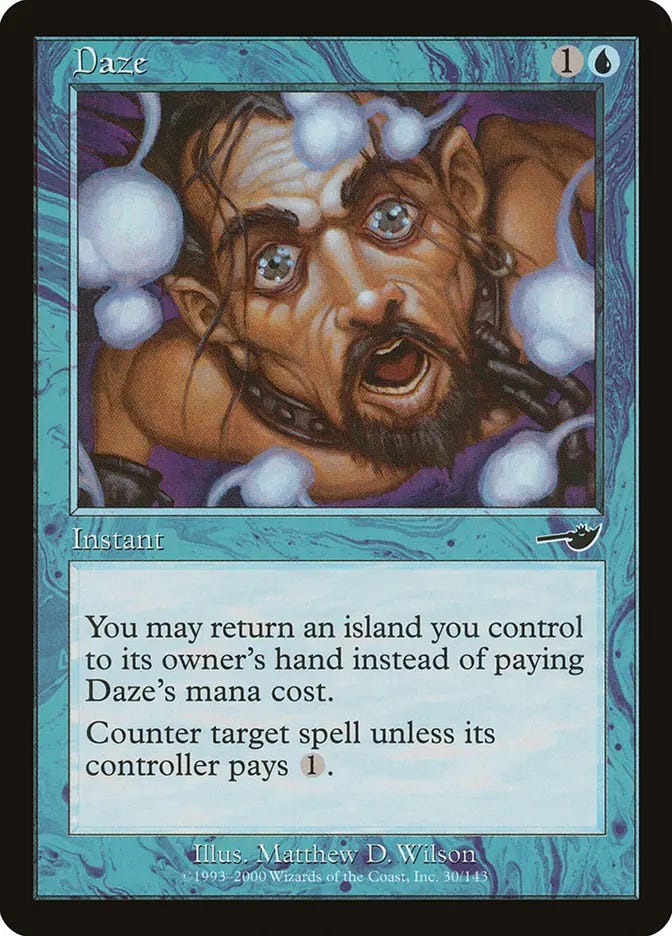
It should come as no surprise that in a format with Sensei’s Divining Top and fetch lands, that the gameplay is slower. My statement is about more than just the time it takes to complete a match. The game state itself progresses at a slower pace in this format as well. The early threats are not as scary compared to modern magic where every first turn play can threaten to end the game quickly on its own.
For this reason, it is much easier to play around Daze. Playing a mana behind in today’s game can be devastating. More often than not, you are forced to jam into Daze anyways. When your spell gets countered for free, it is absolutely backbreaking. At least Force of Will costs an additional card and a life. The drawback to Daze is almost non-existent in current Legacy where everything is cheaply cost.
In the games I played, I did not feel punished for playing a mana behind or forcing the issue on my opponent’s end step. Play your one drop instead of your two drop on your second turn. Wait until you have made another land drop. Cast your spell end of turn to draw the counter and resolve your real threat on the following turn. Patience is rewarded. Sometimes it is correct to play into Daze, but I enjoyed that I was afforded the ability to actually make decisions.
3.Deck names used to be so much cooler
Deck names nowadays are so lame. They all fit the same cookie cutter formula. Izzet Mythic Card. Mono Green Land Card. Five color Oops We Broke the Format.
Back in the day, deck names were so much cooler. If you did not play the format, you probably would not know what they were. Team America? That is red, white, and blue, right? Nope. Clearly, that is blue, black, and green.
Canadian Threshold speaks to the mechanic on Nimble Mongoose while also being a nod to the players who popularized it. Zoo is a bunch of animals breaking loose. Add Dark Confidant to the mix, and now the deck is Dark Zoo. Even Merfolk is called Fish despite having a simple name to begin with.
Some deck names I do not know the etymology for, but who cares! They are still more imaginative than anything today. I could list them all, but you get the point. I love the uniqueness of names that bring the deck to life more than just the cards in a list.
4. Current mulligan rule is more fun
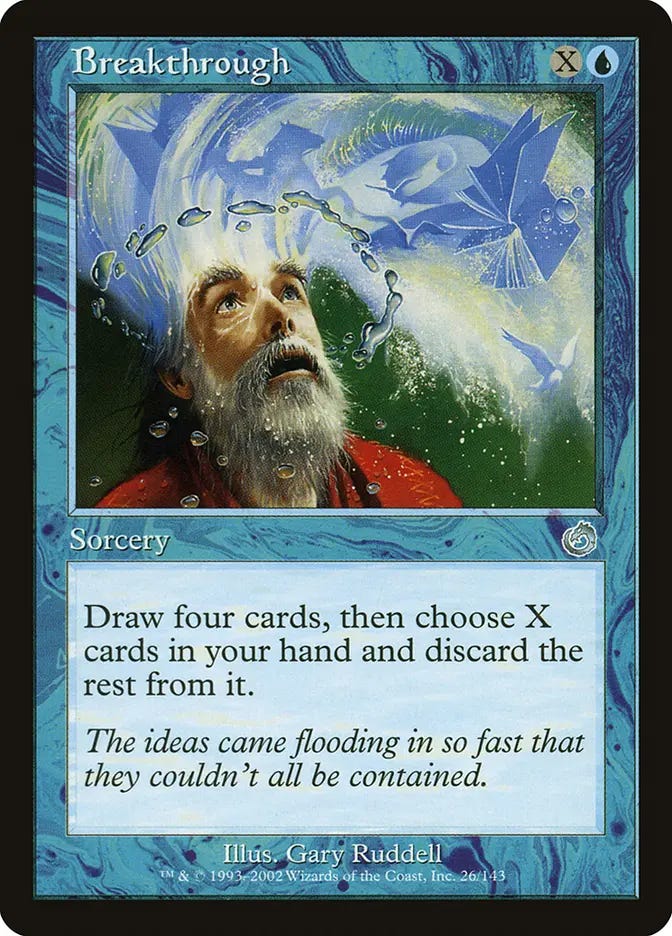
Having fewer non-games due to mana screw or flood is important. People are choosing to play Classic Legacy for one reason: Fun. Non-games due to self-inflicted mana issues are not fun. I remember several tournaments where a mulligan to six felt like an uphill battle. A mulligan to five was a death sentence. The cards are the same as they were back in the day, but the mulligan rules are not.
I believe that the current mulligan rule is perfect. This rule is the best iteration since I have been playing magic. Five cards is still rough, but getting to pick five out of seven at least allows you to come up with a gameplan for your disadvantaged start.
The mulligan rule does help the more degenerate combo decks win faster. I am aware that there can be non-games as part of certain archetypes’ game plans, but that is what Force of Will is for! The beauty of the format is that every deck is a degenerate deck, so everyone is playing by the same (lack of) rules.
5. Tarmogoyf is SO back!
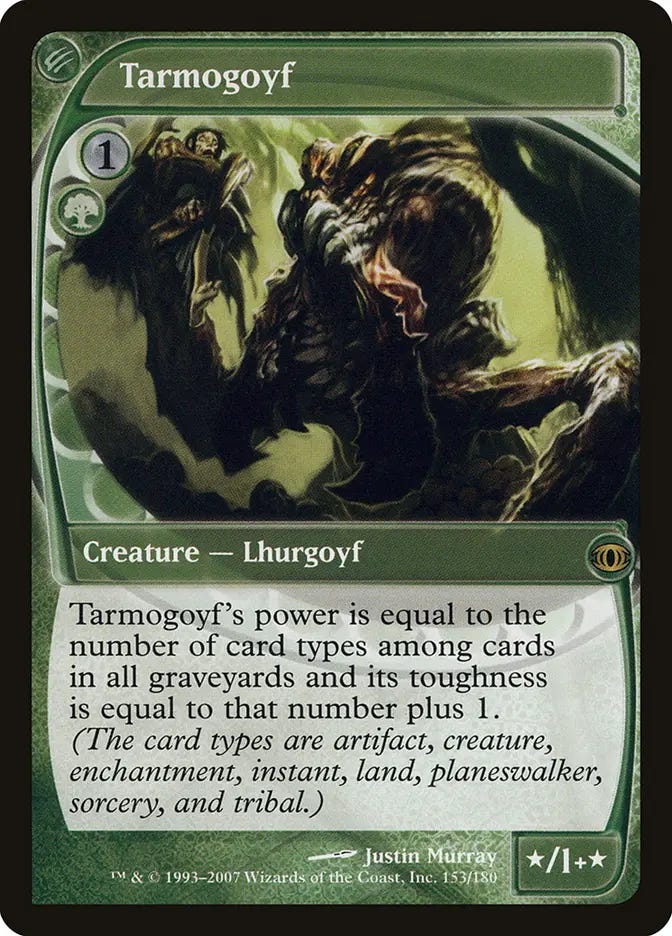
Tarmogoyf is one of my favorite creatures of all time. The Lhurgoyf was an absolute menace. You would find any way to play this creature in your deck if you could. This once titan of the format does not see play anymore. Spiritually Llhurgoyfs live on through successors Barrowgoyf, Nethergoyf, and Pyrogoyf, but we do not see Tarmogoyf at all anymore. There is literally a card that makes Tarmogoyf tokens. That is how far it has fallen.
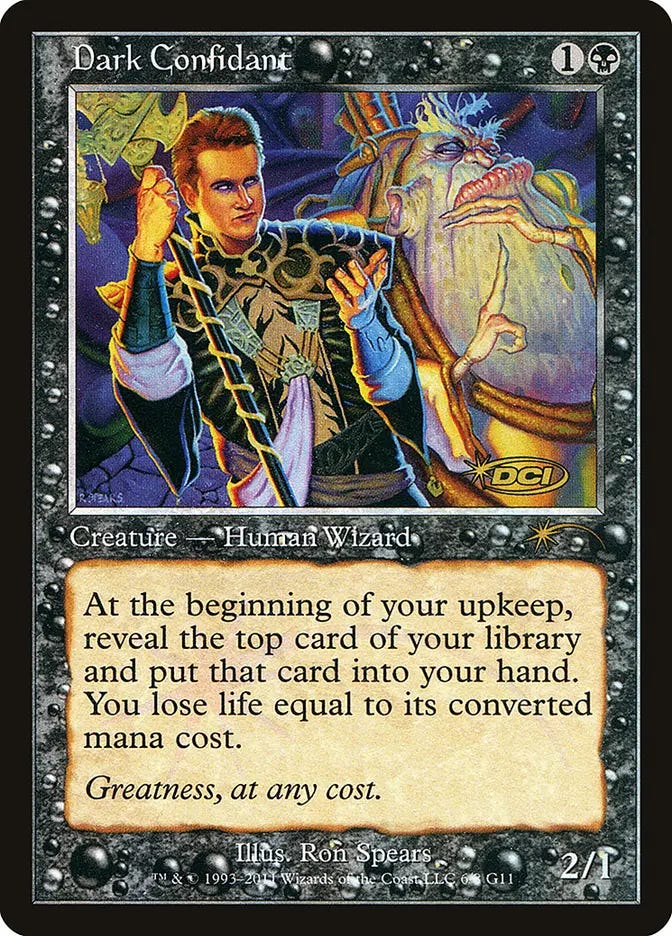
At this tournament, Tarmogoyf was alive and well. Paying one green and a colorless is value for one of (if not the best) threats you can have. Powerful yet fair. The perfect creature for all phases of the game. Tarmogoyf shined all day as part of the first place Dark Zoo deck. That deck also played Goyf’s partner in crime, Dark Confidant. Greatness, at any cost. The cost is ignoring the boring new cards and playing your old favorites? Sign me up.*
First place was a playset of Future Sight Tarmogoyfs on top of store credit. Tarmogoyf is SO back!
*I am aware that I play newer printings of the old cards. That was not my point!
6. Mishra’s Bauble is underplayed
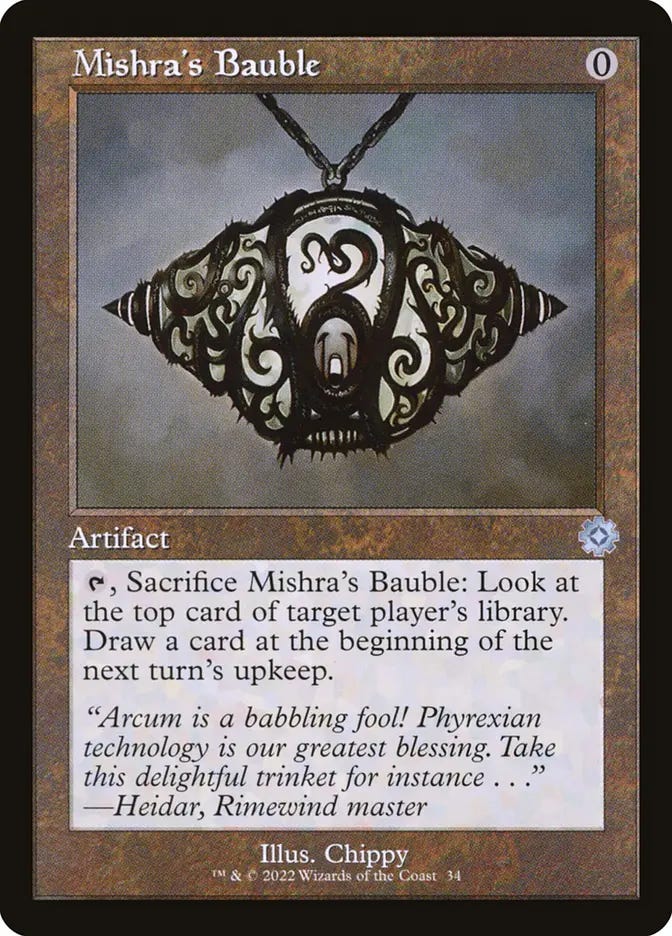
Consider this one my hot take. This article was originally just 5 observations, but I thought of Mishra’s Bauble after I finished my first draft. I believe that Bauble first began to see popularity with Delerium in Traverse the Ulvenwald and Death’s Shadow decks. Later when Lurrus of the Dream Den was legal in the format, Bauble saw another resurgence. With Lurrus, the recurring card advantage and information engine is obviously strong, but there are other ways that the zero mana artifact is utilized.
I play Delver in Legacy with 4 copies of Mishra’s Bauble. It has strong synergy with triggering and growing Dragon Rage Channeler. You can double spell with Cori-Steel Cutter on turn 2. You can even delve it away for Murktide Regent, albeit for one less +1/+1 counter.
There are a lot of parallels that can be drawn to Classic Legacy. Artifact is another card type to grow your Tarmogoyfs. It can be delved away for Tombstalker with no drawback. Zero mana for cheap immediate fuel for Grim Lavamancer can cause a surprise. I see a lot of scenarios where it would be reasonable to play Bauble.
I think this card may not have been explored as much in older iterations of the format. Deck builders should take another look at Mishra’s Bauble for Classic Legacy.
Closing Thoughts
By no means am I an authority on Classic Legacy. These are merely the observations of someone who played his first tournament of a format he played fondly a long time ago. If you disagree with any of my takes, please sound off in the comments. I would love to have a discussion.
This tournament was a lot of fun. I went 3-2 with the following matchups:
Round 1: Bug Depths win 2-0
Round 2: Mono Red Stompy lose 1-2
Round 3: Mono Red Burn win 2-0
Round 4: Canadian Threshold win 2-0
Round 5: Team America lose 1-2
Premodern is my main love for Magic, but Classic Legacy is an amazing pairing that I hope to play more of in the future.